CCS, The Predatory Delay Tool for the Fossil Fuel Industry
Carbon Capture, the last roll of the dice for the fossil fuel industry



Carbon capture and sequestration (CCS) is a method heavily promoted by the fossil fuel industry lobby as a "climate solution".
The reality is different - it's not a climate solution, but in fact a solution which allows them to continue to burn fossil fuels.
What's the play, and why does it need so much subsidy to enable deployment?
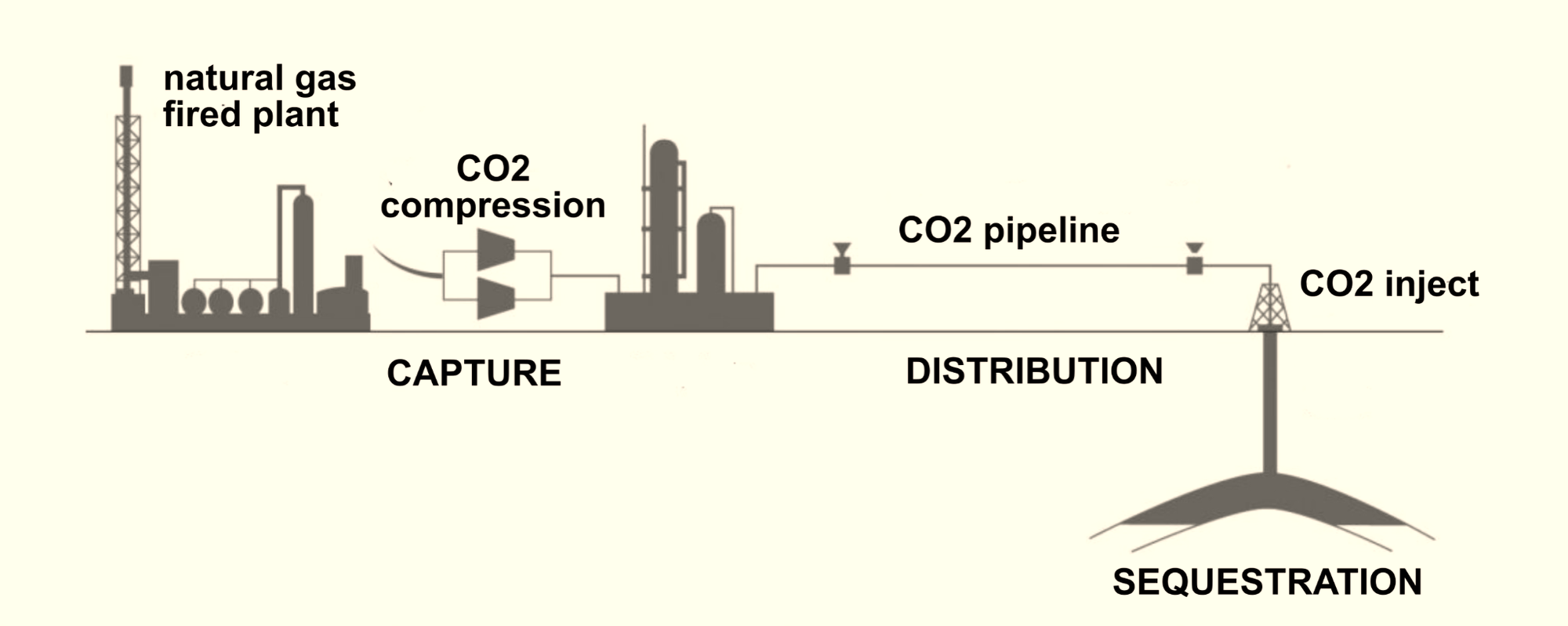
Carbon capture and sequestration is an expensive technology to deploy because it consists of three components:
The goal of CCS is to stop fossil CO2 emissions from power plants and the production of cement, steel, or hydrogen from entering the atmosphere.
A Weighty Problem
Burning 1 tonne of methane produces approximately 2.75 tonnes of CO2, while burning 1 tonne of coal produces between 1.8 and 3.7 tonnes of CO2, depending on its quality.
The mass of CO2 is 2-3x higher than the mass of methane or coal.
As of early 2026, the total cost for carbon capture, transport, and storage (CCS) in Europe is high, ranging from €50 - €300/tonne of CO2. This significantly exceeds initial forecasts and current EU carbon permit prices. In the USA, it is approximately €93 - €233/tonne of CO2.
Can you see the problem here?
Who is going to pay this cost, to deal with this volume, of waste product?
Reality Check
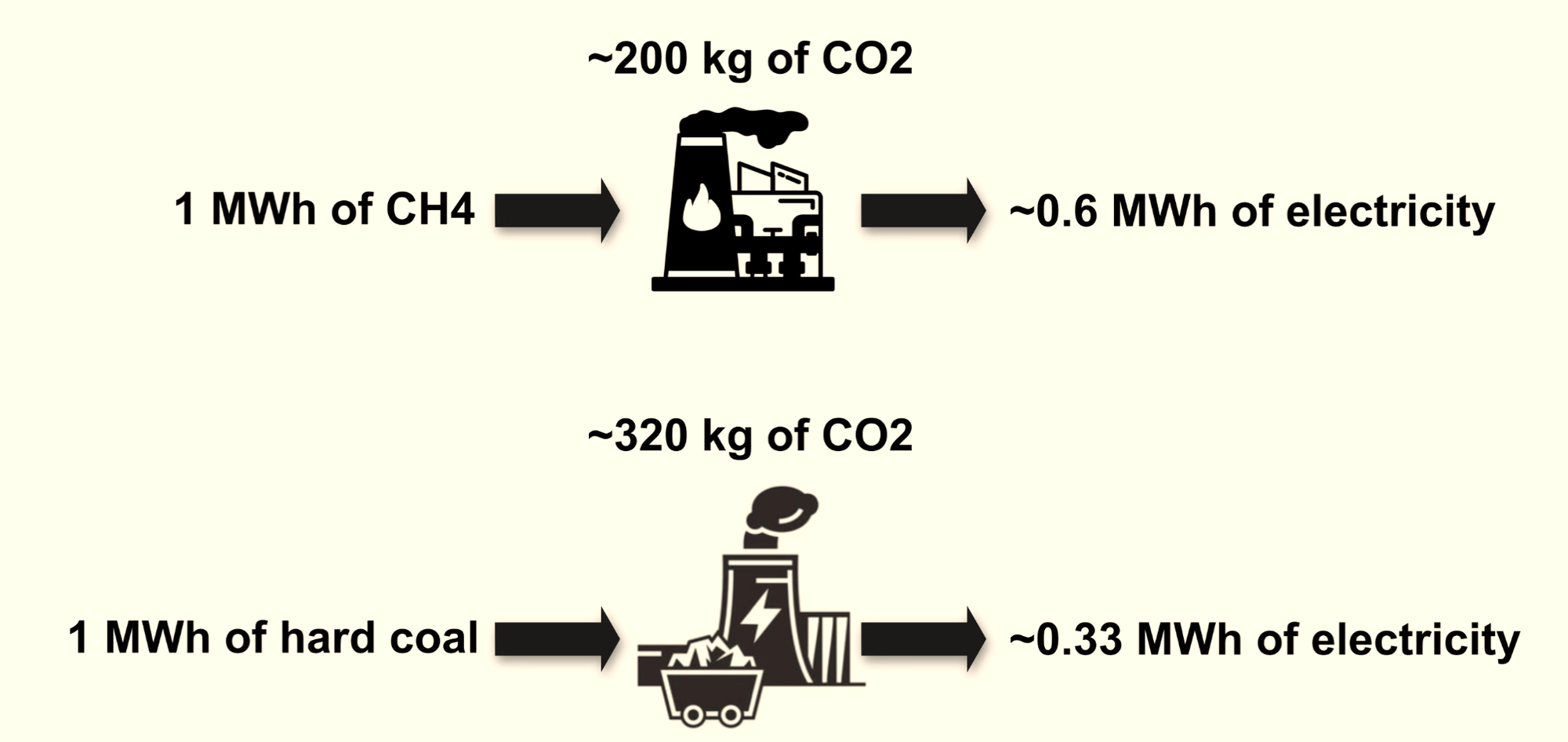
A high-efficiency Combined Cycle Gas Turbine (CCGT) power plant typically produces 0.6 MWh of electricity and ~200kg of CO2 by burning 1 MWh of natural gas.
A typical coal-fired station produces 0.33 MWh and ~320kg CO2 by burning 1 MWh of hard coal.
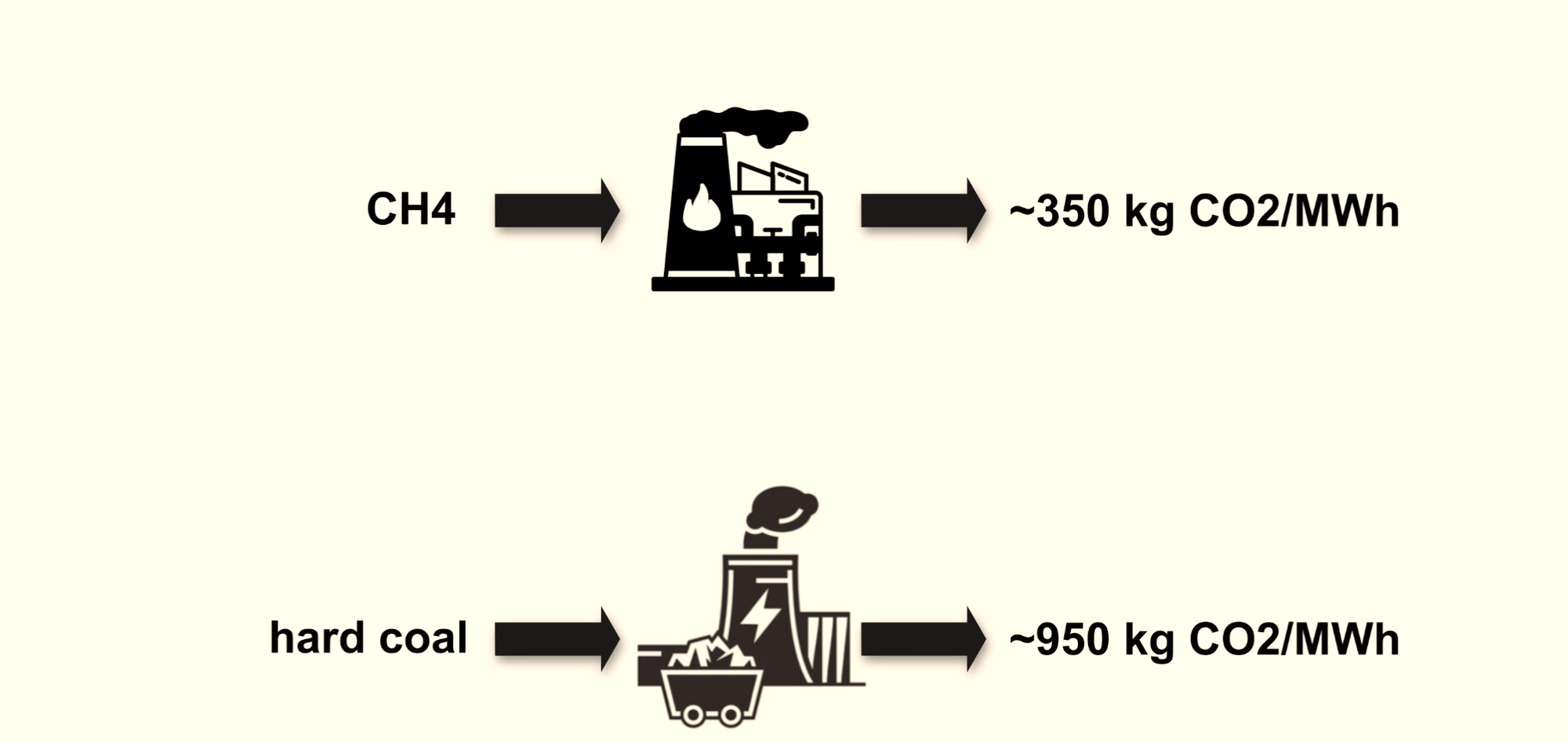
The CO2 intensity of electricity from the CCGT plant is 335-400 kg CO2/MWh or ~350 kg CO2/MWh.
The CO2 intensity of coal-fired power plants is 800-1200 kg CO2/MWh or ~950 kg CO2/MWh on average.
Electricity Pricing Impact
As of early 2026, the wholesale electricity price in the EU (excluding emission allowance costs) is €80 - €100 MWh. By comparison, the wholesale cost of electricity generation from hard coal is €45 - €55 MWh.
Currently, EU Carbon Permits (EUA) are trading around €74 - €76/tonne CO2, but CCS ranges from €50 - €300/tonne of CO2, or €175/tonne CO2 on average.
It means that CCS is more expensive than emission allowance costs
Gas generated electricity would cost €110-€130/MWh (EUA included) or €150-€170 EUR/MWh (CCS included). Coal electricity would cost €105-115/MW (EUA included) or €225-235/MW (CCS included).
The difference between the market wholesale electricity price and the cost of fossil fuel generation is very significant.
At this point, we should remember that by comparison, renewable generation does not require the additional costs of EUA or CCS. Fossil fuel generated electricity cannot economically compete with renewable generation electricity.
Further reading on the trading system and its impact here;
 Clever Markets
The Capture Process
Post-combustion capture primarily uses solvents, commonly monoethanolamine (MEA), to absorb CO2 at coal or gas-fired plants, which removes about 90% or more of CO2 from the exhaust. Then, a stripper heats the CO2-rich solvent to release the CO2.
90% removal - in principle, effective, but...
The next step in the process is to compress the pure CO2 into a supercritical state (liquid-like), and transport it by pipeline, ships, trucks, or trains for injection into deep geological formations.
There's another problem.
The capture process uses significant energy, typically 15–25% of a power plant's total energy output.
This parasitic load is primarily to generate steam for regenerating the solvent (releasing CO2).
Another cost burden that fossil fuel electricity cannot afford to bear in comparison with renewables.
A reminder that a multi-step complex process simply cannot match direct renewable generation.
It seems the deck is stacked - fossil fuel generation doesn't have the cards. Or perhaps it just has too many!
Subsidy Capture Process
Carbon capture and storage will never be cost-effective when compared to alternatives like renewable sources of energy.
Now we can see WHY it needs taxpayer subsidies to be deployed - it is such an economic cost burden to power generation, generators can not possibly sustain it.
And we know the fossil fuel industry doesn't like to shoulder the burden; it prefers to push costs downstream to society, while using the atmosphere as its emissions storage facility. Anything else would affect profits.
In the UK alone, there is a pot of around £22bn available for CCS in various forms and applications. Scale this up around Europe, and the numbers become incredible.
Cynical view...that UK subsidy became available after a sustained period of enhanced lobbying activity from the fossil fuel industry;

You can read more about the murky world of fossil fuel lobbying for CCS subsidies in this excellent investigation by De Smog.
Heavy Burden
The tonnes of fossil CO2 produced from energy generation, needs a distribution system that is x2-3 larger than the current fossil fuel distribution system. Let that scale sink in - who, where, and why would anyone want that?
CCS increases electricity costs by 50-500% at least, depending on the type of fossil fuel power plant.
Carbon capture and storage is expensive, inefficient, and a distraction from renewable energy deployment. It's not a climate solution - it's an answer to a problem we don't need to solve.
It is however, a solution for the fossil fuel industry, allowing them to continue to burn fossil fuels while we pay for it.
About the Author
Michael Sura

Michael Sura - Energy and transport analyst, strategist, and advisor, based in Slovakia 🇸🇰