
Buried Climate Evidence at Risk of Saying Buried
A 500m rock record may hold critical clues about geogenic toxins in a key regional hydrologic reservoir. One researcher is racing to find out - before federal funding cuts.


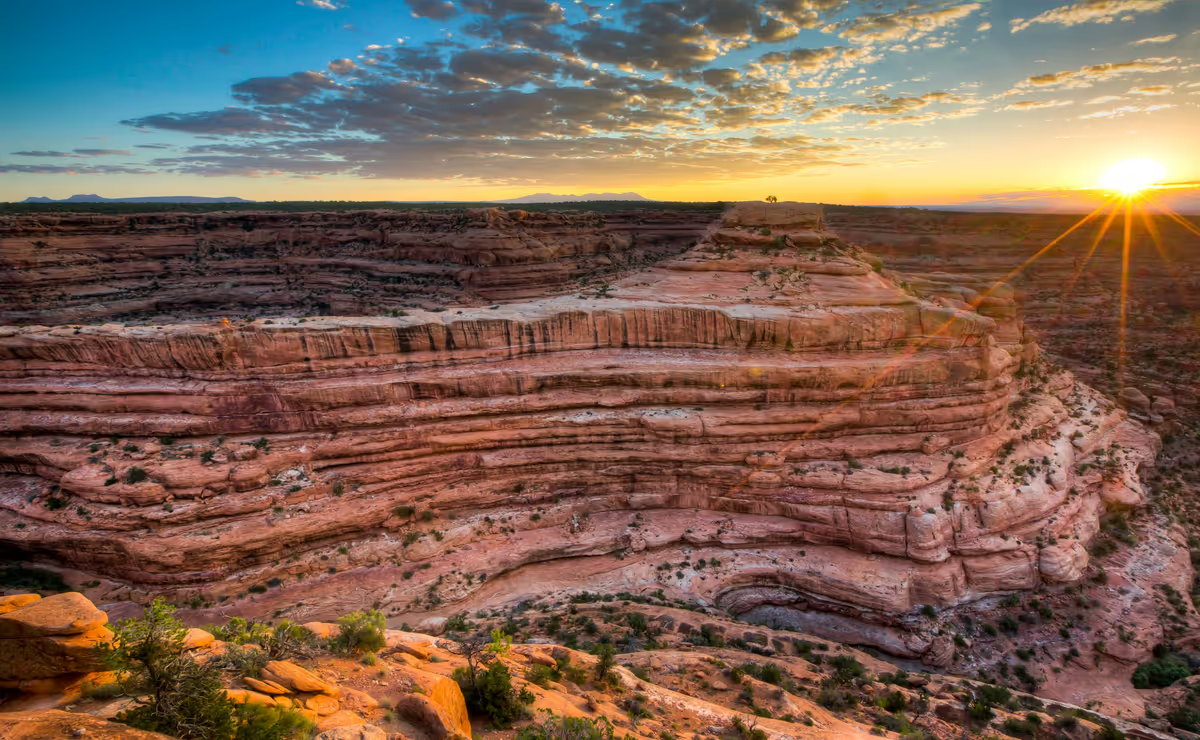
A 500-metre rock record drilled inside Bears Ears National Monument captures the last major icehouse-to-greenhouse climate transition, and may hold critical clues about geogenic toxins in a key regional hydrologic reservoir. Dr Jonathan Stine, University of Minnesota, is racing to find out before federal funding cuts end the work for good.
In 1981, a drilling crew pulled ~500 metres of ancient rock from what is now Bears Ears National Monument in Utah. Cataloguers stored the core, and it remained largely forgotten. Decades later, a postdoctoral researcher believes it holds an urgent answer about one of the region's most important and entirely uncharacterised, hydrologic reservoirs.
A Core from Another Era
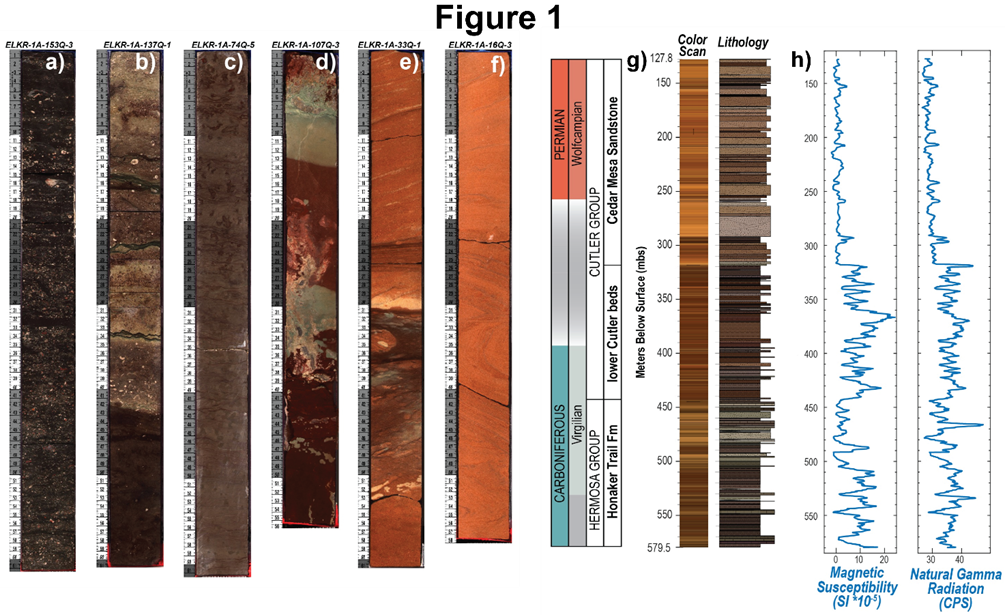
Researchers drilled the Elk Ridge Core (ER-1) in 1981 for a federal nuclear waste project within the present-day Bears Ears National Monument. It preserves ~500 m of sedimentary rocks known as the Cutler Group, deposited approximately 300 million years ago. This interval records the last major icehouse-to-greenhouse climate transition, making it highly relevant to understanding both the evolution of life and modern long-term climate behaviour.
The Cutler Group also serves as an important hydrologic reservoir for the regional ecosystem, giving this ancient rock record an urgent present-day significance.
The Question No One Has Asked
Dr Jonathan Stine, a postdoctoral researcher at the University of Minnesota's Department of Earth Sciences, has spent years building a detailed scientific portrait of ER-1. He has split, imaged, and logged every metre of the core. He has measured its magnetic properties, mapped its gamma-ray signature, and used microscopic fossils to pin down its age with precision.
What he could not do to date, and what matters most, is to measure its chemistry.
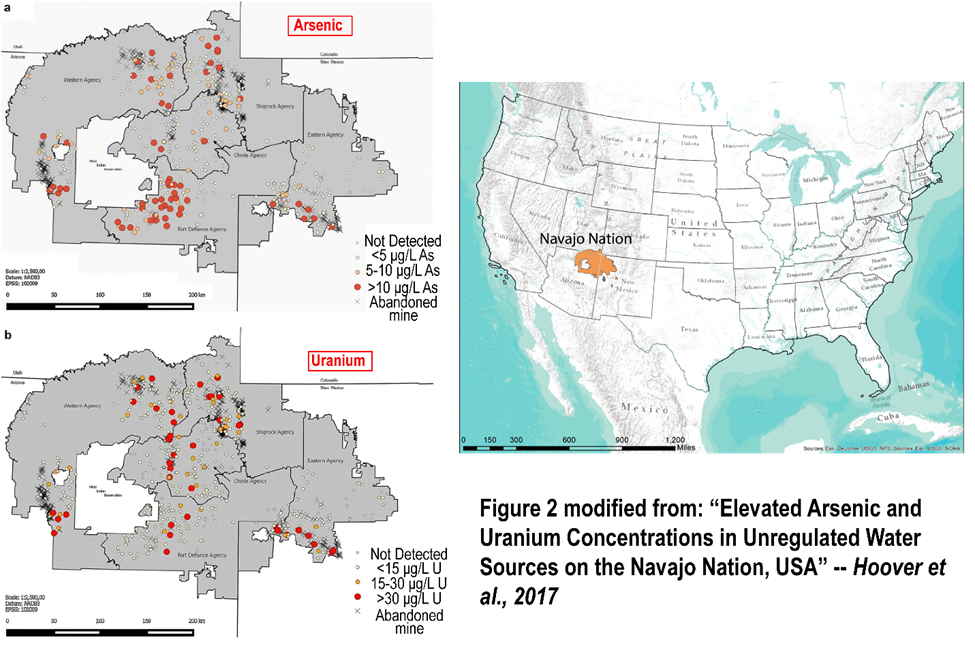
Regions directly to the south of Bears Ears National Monument are known to carry dangerous concentrations of potentially toxic elements such as uranium and arsenic. The bordering regions could also contain dangerous levels of contaminants. However, no research conducted has determined whether similar geogenic toxins are present within the hydrologic reservoirs, within Bears Ears itself.
The Cutler Group also serves as an important hydrologic reservoir for the regional ecosystem - yet it remains uncharacterised despite its hydrologic importance.
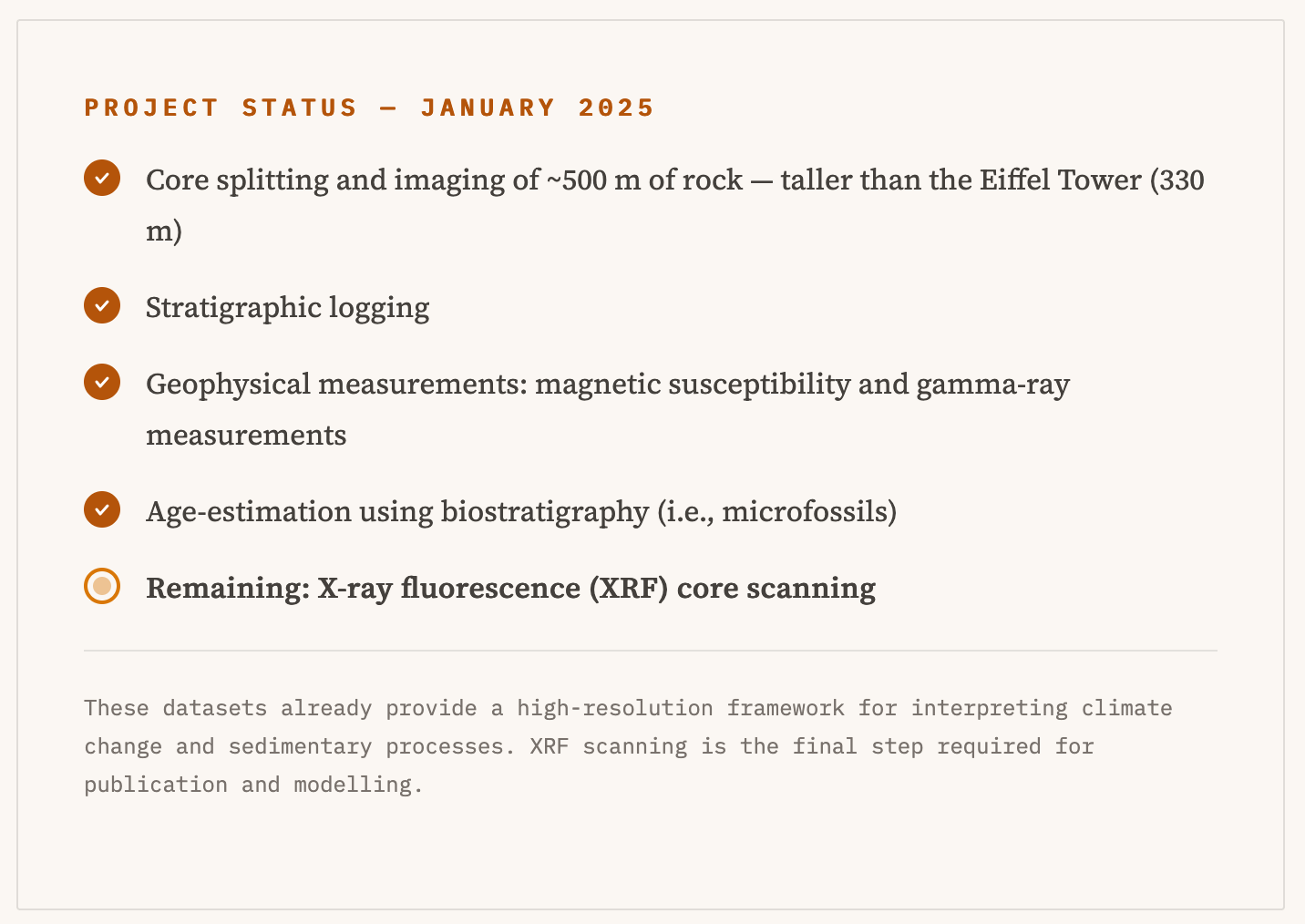
The remaining critical step in Stine's work is X-ray fluorescence (XRF) core scanning. This method uses X-rays to determine the relative bulk elemental composition within a rock. When applied to a core like ER-1, XRF scanning produces a continuous record that can quantify elemental composition tied to climate forcing and depositional conditions.
For example, variations in K/Al indicate transitions from wetter to drier climatic states, and critically, assess geogenic contaminants such as uranium and arsenic in the formations that act as regional hydrologic reservoirs.
It is, by the standards of geological research, a relatively modest undertaking. The core is ready, the methodology established, and the scientific case is clear.
What's missing is the funding.
The Work to Date
Science Under Siege
Stine's situation is not an isolated one. It reflects a broader pattern of disruption to American scientific research, accelerating sharply in recent years.
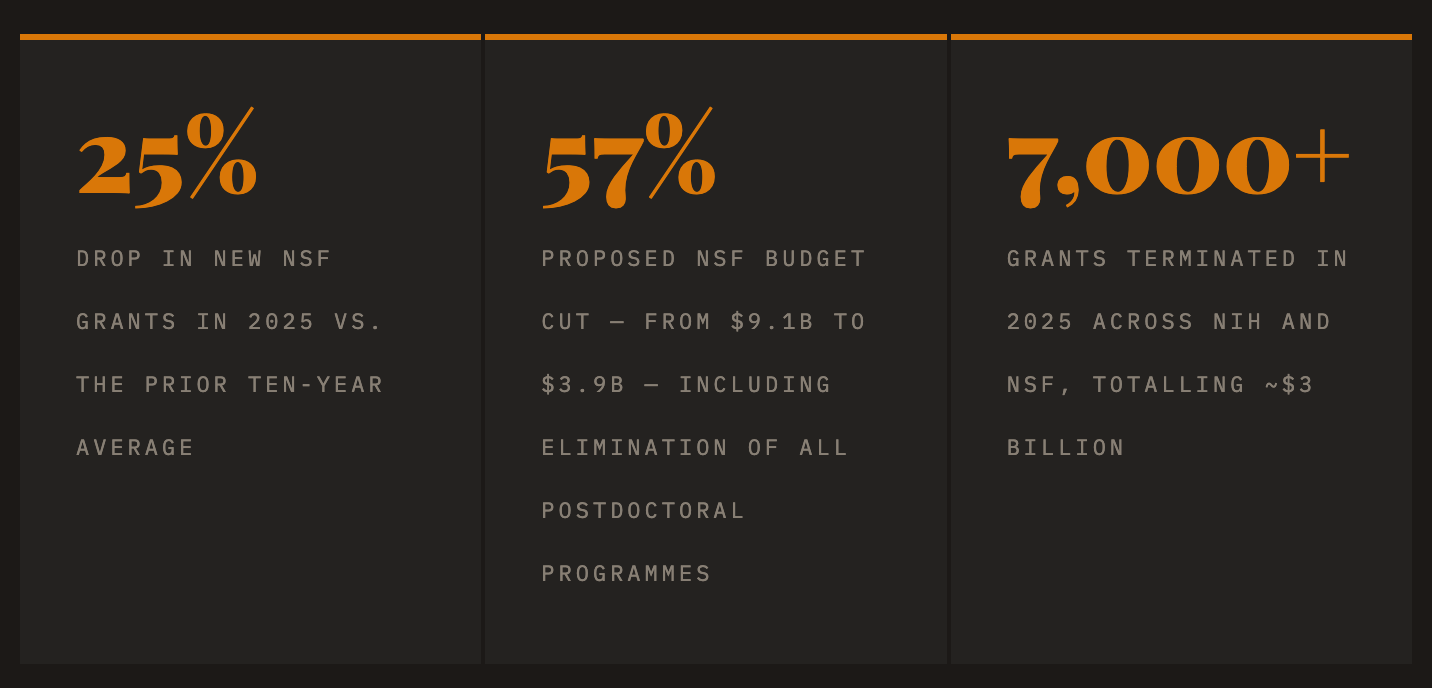
Though Congress ultimately approved an NSF budget of $8.8 billion - largely preserving existing funding levels - the administration's proposed 57% cut and its explicit call to eliminate all postdoctoral support sent a clear signal about federal priorities.
For early-career researchers like Stine, whose positions depend on the continuation of exactly that kind of support, the threat is both real and ongoing.
The result is a generation of researchers doing essential science on collapsing institutional ground. Active projects and important analyses are stalling at the final step for want of modest, targeted support.
Why it Matters Beyond the Lab
The Elk Ridge Core project sits at a rare intersection: deep-time climate modelling relevant to predicting future environmental shifts resulting from anthropogenic climate change, and direct environmental assessment of an important groundwater system.
If they don't, that too is valuable to establish. Either way, the answer matters - to the local community, to regional ecosystems, and to the broader scientific record.
This is specifically research that links geology directly to environmental justice and community resilience. The type we need more of, not less.
It is also currently the type most vulnerable to being quietly left unfinished when federal budgets tighten and marginalise climate science research.
What Comes Next?
To keep the project alive, Stine is currently raising bridge funding through a small crowdfunding campaign.
The goal: complete the XRF core scanning, finish the dataset, and enable publication - ensuring the legacy core, preserved since 1981, delivers on its scientific potential.
The rock record has waited 300 million years. The remaining work is modest. What's needed now is the support to finish it.
Support the Science
A personal message from Jonathan:

About the Author
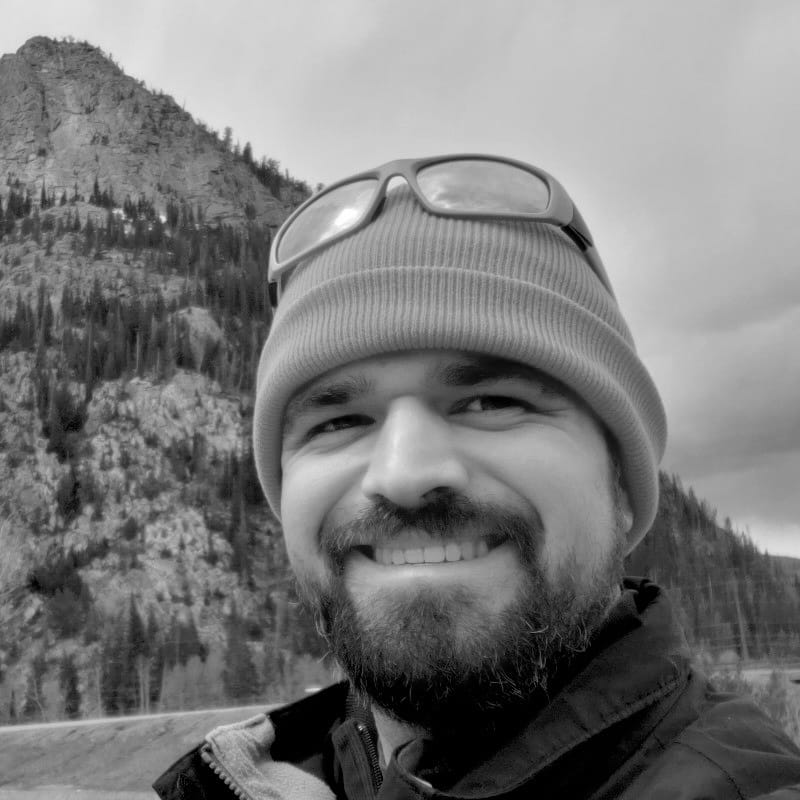
Dr Jonathan Stine
Jonathan Stine is a geologist who earned his PhD from the University of Texas at Dallas in 2022. His research focuses on using rock-magnetic, palaeomagnetic, and geochemical datasets to study the effects of ancient abrupt climate transitions on prehistoric life.
He currently works as a postdoctoral associate at the Institute for Rock Magnetism within the University of Minnesota-Twin Cities. More of his research here.
You can follow Jonathan on LinkedIn:
Dr Jonathan Stine - Geoscientist